
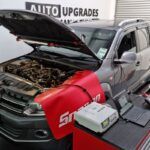
Volkswagen Amarok 2.0 BiTDI Performance Tuning
The Volkswagen Amarok 2.0 BiTDI is one of the most refined dual-cab utes ever sold in New Zealand. Comfortable on the road, capable off it, and powered by Volkswagen’s sophisticated twin-turbo diesel, it offers a level of drivability that sets it apart from many of its competitors. What often lets the Amarok down, however, is not its hardware, but its conservative factory ECU calibration.
This Amarok 2.0 BiTDI came to AutoUpgrades for exactly that reason. Despite its strong reputation, the vehicle felt hesitant at low engine speeds, subdued under load, and slower to respond than expected when overtaking or towing. The objective was clear: deliver stronger, earlier torque and smoother response without compromising the refinement and reliability engineered into the platform.
Why the Factory Calibration Leaves Margin
The 2.0-litre BiTDI engine is used across multiple Volkswagen platforms and markets. To satisfy global emissions regulations, fuel quality variation, and drivetrain protection requirements, the factory ECU calibration is deliberately conservative. Torque delivery is softened, boost onset delayed, and throttle response filtered to ensure consistency in all conditions.
For New Zealand driving, particularly towing, highway cruising, and mixed urban use, this approach leaves usable performance on the table. The engine is mechanically capable, but the calibration prioritises compliance over responsiveness.
Unlocking the Potential of the BiTDI Engine
Volkswagen Amarok 2.0 BiTDI performance tuning begins with a full ECU read and structured analysis of the factory software. Key focus areas include boost pressure control, fuelling strategy, torque request modelling, and transient response. All calibration changes are made within the factory control framework rather than by bypassing systems.
The goal is accurate torque delivery. By refining how torque is requested and limited, the engine responds more immediately to throttle input without increasing mechanical stress. Boost builds earlier and more cleanly, power delivery becomes smoother, and the engine operates closer to its optimal efficiency window.
How the Amarok Drives After Calibration
Once calibrated, the difference is immediately noticeable. Low-speed response improves significantly, with stronger torque available earlier in the rev range. Throttle inputs produce predictable, linear acceleration rather than delayed response followed by surge.
Mid-range performance is transformed. Overtaking requires less planning, hills are climbed with confidence, and towing loads feel lighter. The transmission no longer hunts unnecessarily, as the torque model aligns better with real-world demand.
Performance and Efficiency Working Together
Improved performance does not come at the expense of fuel efficiency. By delivering torque earlier and more predictably, less throttle input is required during normal driving. Many Amarok owners report improved fuel consumption, particularly during highway cruising and towing.
The engine feels more relaxed at speed, operating in a more efficient part of its torque curve. This balance of stronger performance and improved economy is the result of disciplined calibration rather than aggressive tuning.
Reliability Considerations on the BiTDI Platform
As mileage increases, EGR-related contamination and drivability issues can become more apparent on the BiTDI platform. Poor throttle response, hesitation, and uneven power delivery are common symptoms. Careful calibration helps mitigate these issues by improving combustion efficiency and reducing unnecessary operating stress.
The result is not only better drivability, but improved long-term consistency. The engine runs cleaner, smoother, and closer to its intended operating parameters.
OEM-Level Calibration, No Compromises
Calibration Scope and Validation
Every Volkswagen Amarok 2.0 BiTDI calibration begins with a verified baseline read of the factory ECU software. Calibration work then focuses on boost strategy, fuelling control, torque modelling, and transient response behaviour. All changes are implemented within the original ECU architecture.
Once calibration work is complete, the vehicle is validated through controlled road testing under New Zealand conditions. Cold start behaviour, part-load operation, towing response, and sustained highway driving are assessed to confirm drivability and consistency. Calibration is revised where required until behaviour meets expectations.
All factory safety systems remain fully active, including boost monitoring, torque limitation, and thermal protection. The result is an Amarok that feels stronger, smoother, and more capable without compromising durability.
Available Now
If your Volkswagen Amarok 2.0 BiTDI feels capable but restrained, this performance tuning solution unlocks its full potential. Expect stronger low-down torque, sharper throttle response, and a smoother, more efficient drive, all delivered with OEM-grade calibration discipline.