
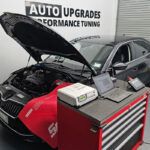
Skoda 2.0 TFSI - Real-World Data Proves the Power of Proper Calibration
Skoda 2.0 TFSI tuning results rarely come with real data, but this case study does exactly that.
Skoda 2.0 TFSI Tuning Results – Measured Performance
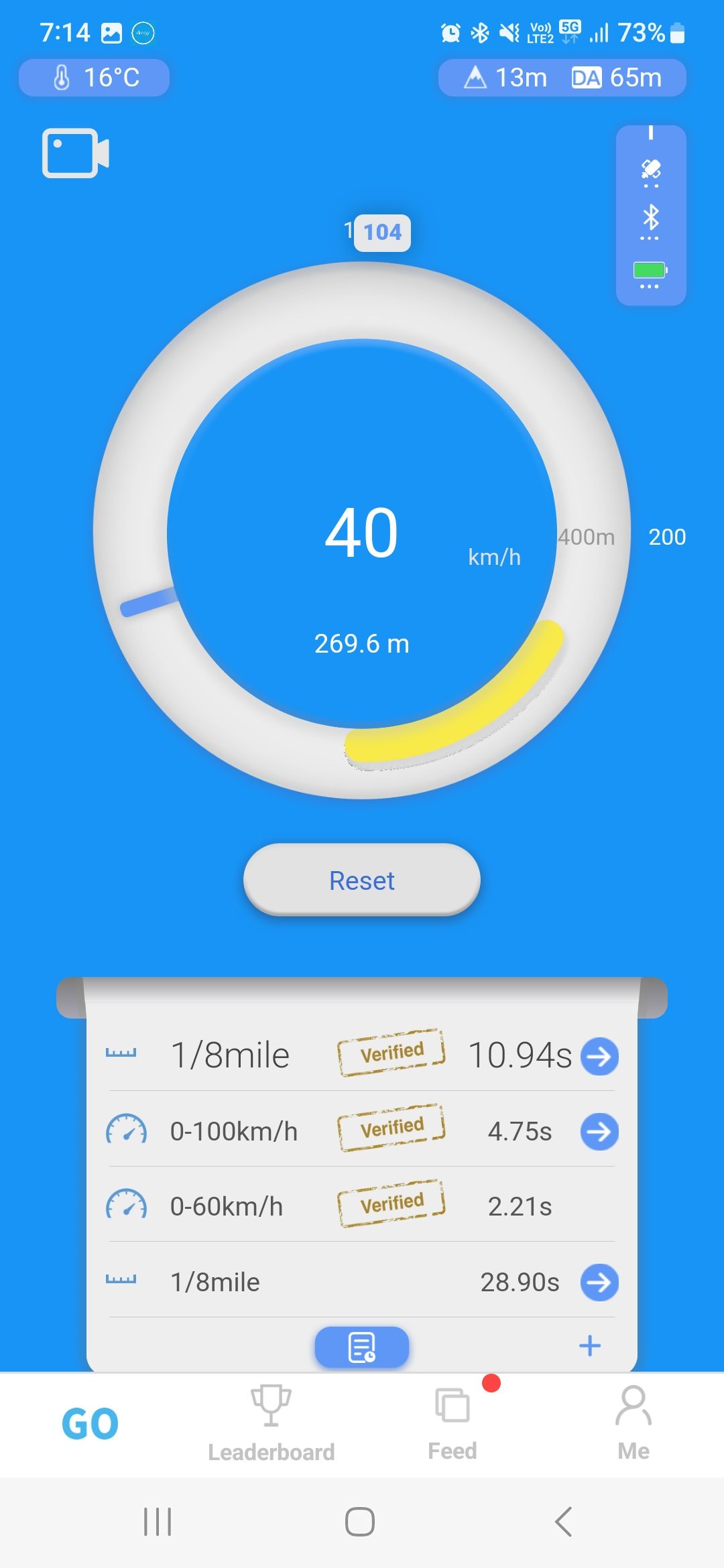
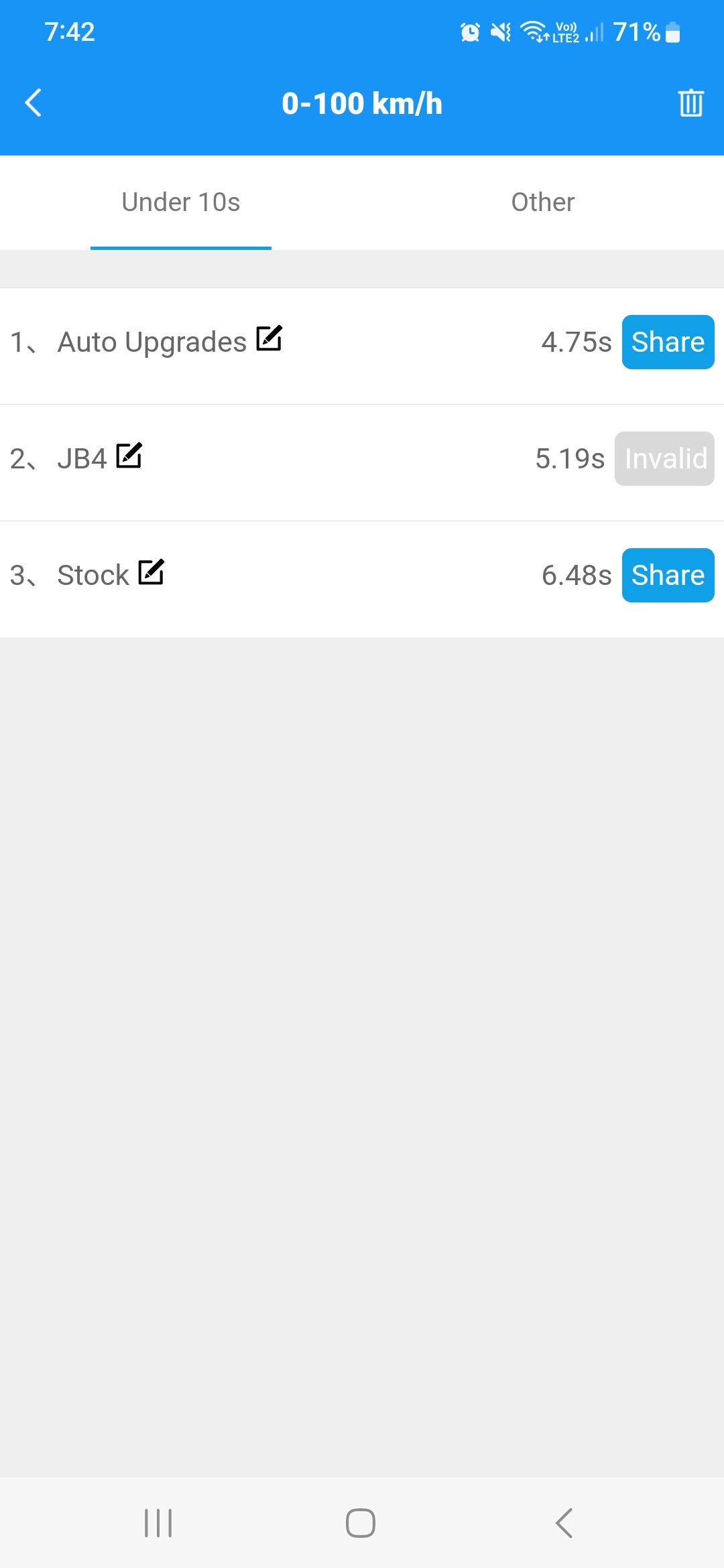
Using Dragy GPS timing, Martin compared his car in three configurations: completely stock, fitted with a JB4 on map 2 (unadjusted), and finally with our
AutoUpgrades custom calibration.
The results speak for themselves. With our tuning, the car was 27% quicker from 0–100 km/h compared to stock. The JB4 piggyback managed a 20% improvement under identical conditions. That extra 7% margin is significant, it’s the difference between “quick” and “seriously fast.”
Importantly, these runs were performed on real roads with a full tank and passenger onboard, making the results fully representative of everyday driving conditions.
Customer Feedback and Test Results
Martin summed it up best:
“I really appreciate the time on the Skoda etc. Results are good! Please see attached best of 3 x 0 to 60 and 0 to 100 comparing stock, JB4 map 2 unadjusted and yours. This is with passenger and full tank on street surface.”
Below are the screenshots he shared showing Dragy acceleration data from the tests:
Why Engineered Calibration Wins
Piggyback modules like the JB4 can add power, but they work within fixed constraints and don’t communicate deeply with the factory ECU logic.
Our bespoke remap integrates fully with the system, optimising ignition, fuelling, torque management, and boost control together. The result is smoother power, stronger consistency, and the kind of reliability you can trust for long-term use.
Martin’s back-to-back testing demonstrates the clear advantage of true calibration over generic plug-in solutions.
Proven Performance, Real Results
At AutoUpgrades, we take pride in results that can be both felt on the road and verified with data.
Martin’s Skoda 2.0 TFSI is now faster, sharper, and more refined, exactly what professional tuning should deliver.
If you’re ready to experience the same transformation, this is your proof: engineered calibration always beats shortcuts.
What the Data Actually Shows
The Dragy results highlight an important distinction between perceived performance and measured performance. A 27 percent reduction in 0–100 km/h time is not achieved through peak power alone, but through improved torque delivery, traction management, and repeatability across the entire acceleration window.
While piggyback systems such as the JB4 can increase boost pressure, they operate by influencing sensor signals rather than reshaping the ECU’s internal control models. This means ignition timing, torque intervention, load calculation, and thermal management remain largely untouched. The result can feel quick in ideal conditions, but consistency often varies as the factory ECU continues to intervene.
With a full ECU calibration, torque request, torque limitation, boost control, ignition strategy, and fuel delivery are all aligned. This allows the engine to deliver power in a controlled and predictable manner, which is exactly what the Dragy data reflects. Faster times are achieved not by forcing the system, but by allowing it to operate efficiently within its designed limits.
Why Real-World Testing Matters
One of the most valuable aspects of Martin’s testing is the environment in which it was conducted. These were not dyno pulls or idealised test conditions. The runs were completed on public roads, with a full fuel tank and a passenger onboard. This removes many of the variables that can skew performance claims.
Real-world acceleration testing exposes how a calibration behaves during transient load, gear changes, traction control intervention, and thermal variation. It also highlights how repeatable the performance is from run to run. The fact that the AutoUpgrades calibration consistently outperformed both stock and the JB4 setup under the same conditions is a strong indicator of proper torque and load management.
This level of testing is far more representative of how the vehicle is actually driven day to day, and it reinforces the value of calibration that is developed with drivability and consistency in mind rather than headline numbers.
Engineered Calibration Versus Add-On Solutions
Piggyback tuning solutions have their place, particularly for users seeking quick installation and reversibility. However, they are inherently limited by their inability to modify core ECU strategies. Boost pressure alone does not define performance, and without integrated control of ignition timing, torque modelling, and protection logic, gains are often uneven.
A full ECU calibration allows the engine to operate as a cohesive system. Torque delivery is shaped rather than spiked, ignition timing is optimised across the load range, and thermal protection strategies are respected rather than triggered prematurely. This results in stronger mid-range performance, smoother power delivery, and improved consistency under repeated acceleration.
Martin’s back-to-back comparison clearly demonstrates this difference. The additional seven percent improvement over the piggyback setup represents more than just extra speed. It reflects a calibration that works with the ECU rather than around it.
Skoda 2.0 TFSI Tuning Done Properly
The 2.0 TFSI platform used across Skoda, Audi, and Volkswagen models is highly capable, but it relies heavily on accurate torque modelling and load control to deliver its best performance. When calibrated correctly, it responds with strong, linear acceleration and excellent drivability.
This case study reinforces what professional ECU tuning should look like: measurable gains, consistent results, and real-world validation. There are no exaggerated claims here, just data-backed improvement that can be felt from behind the wheel and verified with timing equipment.
If you are considering tuning for your Skoda 2.0 TFSI, this is a clear example of what engineered calibration delivers when it is done properly. Faster acceleration, smoother response, and performance that remains dependable in everyday driving.